

OVERVIEW
Thank you in advance for your efforts as a PyTorch Day China 2026 program committee member.
Below you will find guides to Sessionize’s evaluation modes in addition to best practices to use when reviewing your set of proposals. Please bookmark this page for easy reference. If you have any questions, please email the PyTorch Events Content Team.
Suggested Topics
Below are the suggested topics PyTorch Day China 2026. Reviewers should keep these priorities in mind when evaluating submissions to ensure the program reflects the strategic direction of the event.
Program Committee Responsibilities
Program committee members are diverse in backgrounds and are invited to the Program Committee. To ensure diversity in the committee and mitigate bias, the PC members are carefully selected by taking into account various factors, like their specific interest and domain expertise. Members are also selected from a diverse range of backgrounds, considering gender diversity, geodiversity, and company diversity.
Program Committee Benefits
To say thank you for your hard work, we are offering reviewers:
AI Evaluations are not permitted.
Please reach out to creyesjones@lfopensource.com if you have any questions regarding the benefits listed above.
STAR RATING EVALUATION MODE
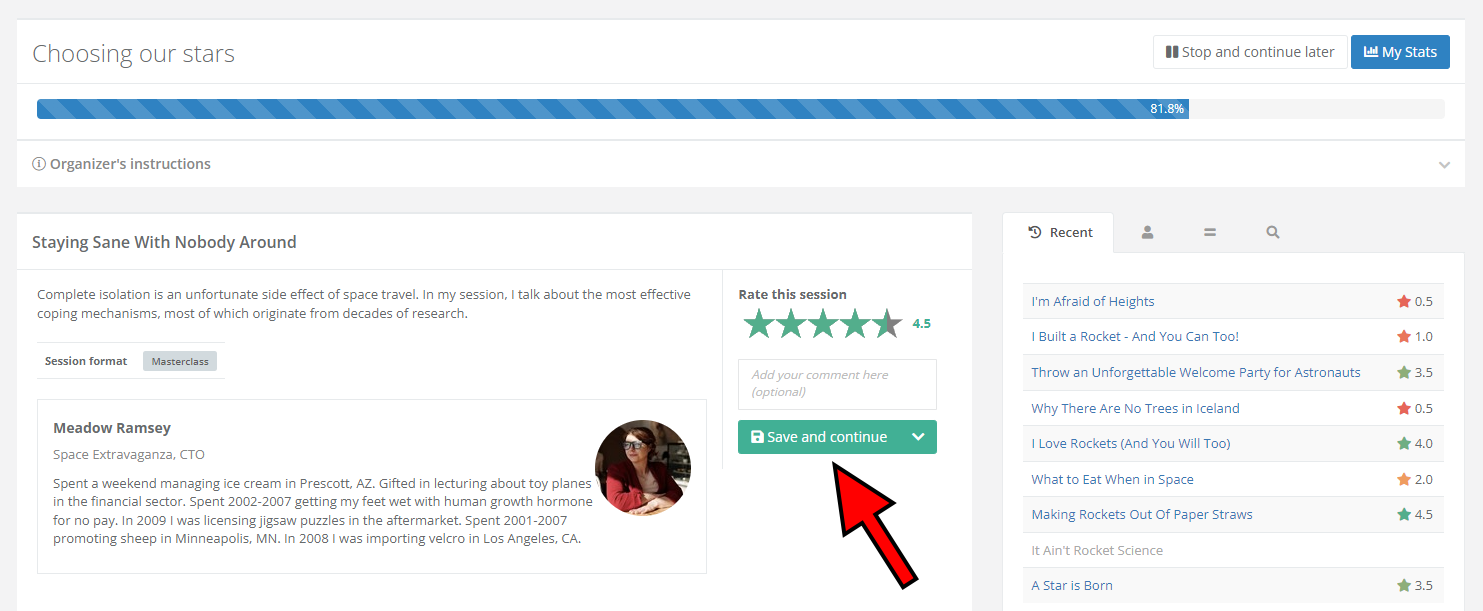
The Star rating evaluation mode is highly user-friendly, requiring only an examination of the session information and a rating between one to five stars. Additionally, half-star ratings (0.5, 1.5, 2.5, 3.5, 4.5) are also available for use. Upon completion, simply click the Save and Continue button to confirm your rating and proceed to the next session.
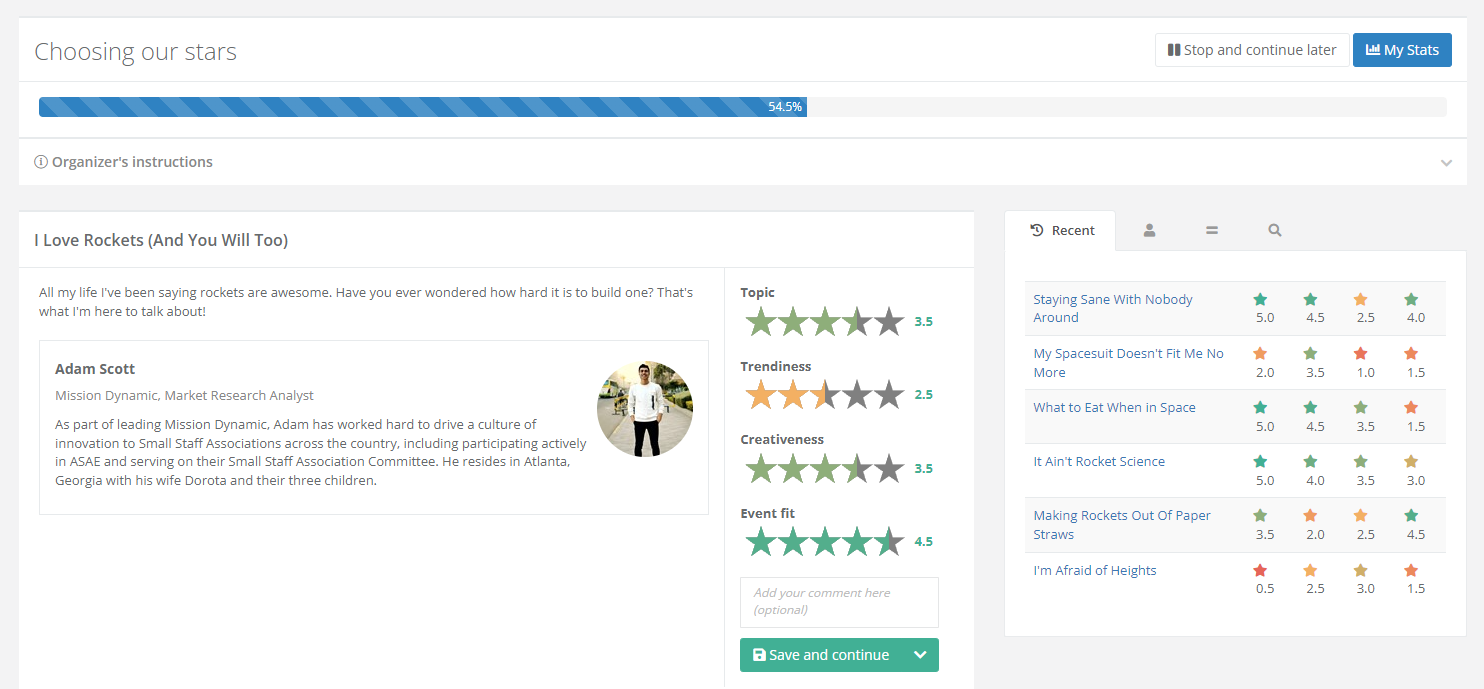
PyTorch Day China utilizes a Stars rating evaluation plan that involves multiple criteria. As an evaluator, you will be required to assess sessions based on the following four criteria as opposed to assigning a singular overall rating:
In addition, we ask that if you are able, please provide feedback in the form of a comment for each session. It is important to ensure that feedback is constructive, especially for rejected proposals, as submitting authors may range from a VP at a large company to a university student. Constructive feedback may include highlighting the positive aspects of a proposal, offering helpful suggestions, and providing factual feedback.
It is crucial to avoid direct attacks and instead focus on objective feedback that can help improve the proposal. Moreover, we strongly advise against using vague comments like “Scoring was tough, I had to cut this” or “LGTM.” Instead, it is essential to provide thoughtful and insightful comments that will assist the co-chairs in making their final selections.
Once you have finished rating a session based on the criteria and provided constructive feedback, click on Save and continue to proceed to the next session. Please note that if your comments are deemed unconstructive, you may not be invited to serve as a program committee member in the future.
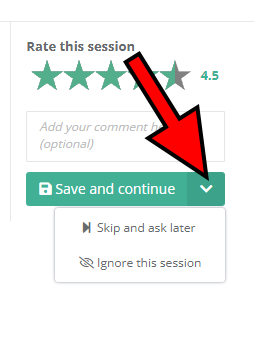
If you have a hard time coming up with a decision about a certain session, you have the option to skip it and come back to it later. Simply click on the arrow flanking the Save and continue button to expand the appropriate menu and select the Skip and ask later option. This can be particularly useful if you have only just started with the evaluation process and would like to get a better sense of the overall quality of the submitted sessions.
In case a certain session covers a subject you’re completely unfamiliar with or poses a conflict of interest, click on the Ignore this session button. The evaluation system won’t ask you about that session anymore.
Track your progress
During the evaluation process, a progress bar will be displayed at the top of the page, providing an indication of your progress. If, at any point, you need to pause the evaluation process, click on the Stop and continue later button located above the progress bar. Upon returning, you can resume the evaluation from where you left off.
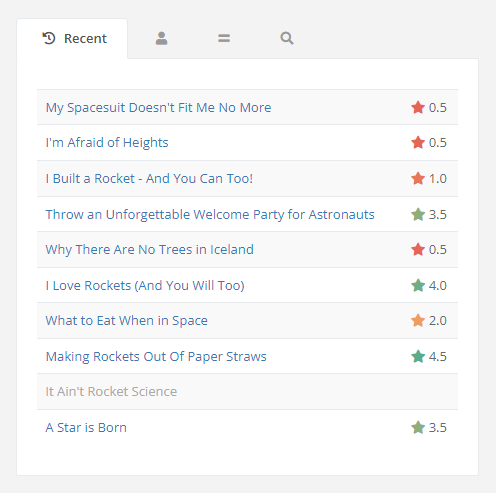
On the right is a box with several useful tabs. The default tab is Recent. You can use it to keep track of your past session evaluations, but it has an additional purpose: you can click on any of the sessions to reopen them and potentially change your evaluation.
Here’s a complete overview of the tabs found in the aforementioned box:
- Recent – a list of sessions you recently evaluated
- Speaker – see other sessions submitted by the same speaker (assuming they exist)
- Similar – browse similar sessions
- Search – look through all nominated sessions
Complete the evaluation and view your stats
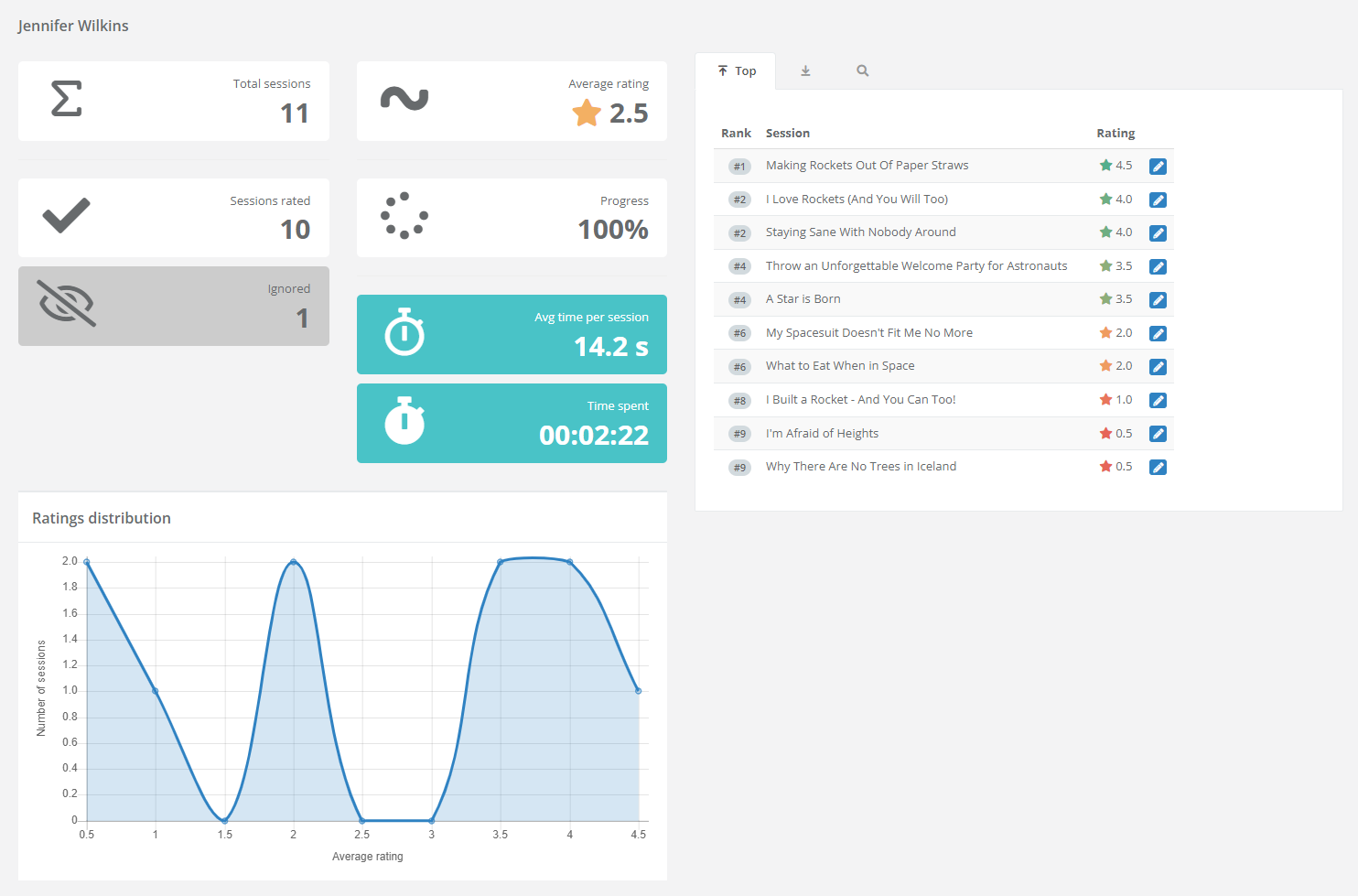
Once you’re done with the evaluation, you’ll automatically be redirected to the Evaluation page. By opening the evaluation plan you’ve just completed, you can view your statistics, as well as potentially change your mind on any of the sessions by clicking on the corresponding edit button.
Your scores will be combined with other members in your review track.
PyTorch Program Committee Guidelines
OVERVIEW
Volunteers who help with the planning, organization, or production of a Linux Foundation event are often seen as representatives of the LF community and their actions can meaningfully impact participants’ experience and perception of the event. Therefore, and in the interest of fostering an open, positive, and welcoming environment for our community, it’s important that all event volunteers hold themselves to a high standard of professional conduct as described below.
These guidelines apply to a volunteer’s conduct and statements that relate to or could impact any Linux Foundation event that the volunteer helps plan, organize, select speakers for, or otherwise serve as a volunteer for. These guidelines apply to relevant conduct occurring before, during, and after the event, both within community spaces and outside such spaces (including statements from personal social media accounts), and to both virtual and physical events. In addition to these guidelines, event volunteers must comply with LF Open Source Event Code of Conduct and the PyTorch Code of Conduct.
Be professional and courteous
Event volunteers will:
Express feedback constructively, not destructively
The manner in which event volunteers communicate can have a large impact personally and professionally on others in the community. Event volunteers should strive to provide feedback or criticism relating to the event or any person or organization’s participation in the event in a constructive manner that supports others in learning, growing, and improving (e.g., offering suggestions for improvement). Event volunteers should avoid providing feedback in a destructive or demeaning manner (e.g., insulting or publicly shaming someone for their mistakes).
Be considerate when choosing communication channels
Event volunteers should be considerate in choosing channels for communicating feedback. Positive or neutral feedback may be communicated in any channel or medium. In contrast, criticism about any individual event participant, staff member, or volunteer should be communicated in one or more private channels (rather than publicly) to avoid causing unnecessary embarrassment. Criticism about an event that is not about specific individuals may be expressed privately or publicly, so long as it is expressed in a respectful, considerate, and professional manner.
Treat sensitive data confidentially and with respect
Event volunteers may have access to details about proposed or accepted speakers and the contents of their talks. They are required to adhere to The Linux Foundation’s guidelines regarding use of this information and may only use it for the purpose of choosing talks for an event. They are prohibited from using this data for any other purpose, including but not limited to the following:
Changes to These Guidelines and Consequences for Noncompliance
The event organizers may update these guidelines from time to time, and will notify volunteers by email. However, any changes to these guidelines will not apply retroactively. If the Linux Foundation Events team determines that a volunteer has violated these guidelines or LF Open Source Event Code of Conduct, it may result in the volunteer’s immediate suspension or removal from any event-related volunteer positions they hold, including participation in event-related committees. If these guidelines are updated and a volunteer does not wish to agree, their participation in the event-related volunteer position will cease until such time as they do agree.
CONTACT US
If you require any assistance reviewing proposals or have questions about the review process or any of the best practices we have suggested, please contact us for assistance.